Daily Rare Answer / Anthropeum
Anthropeum
The daily museum game: ten real artifacts, and for each one you guess where in the world it was made and when.
An independent daily game. Plays here from anthropeum.com
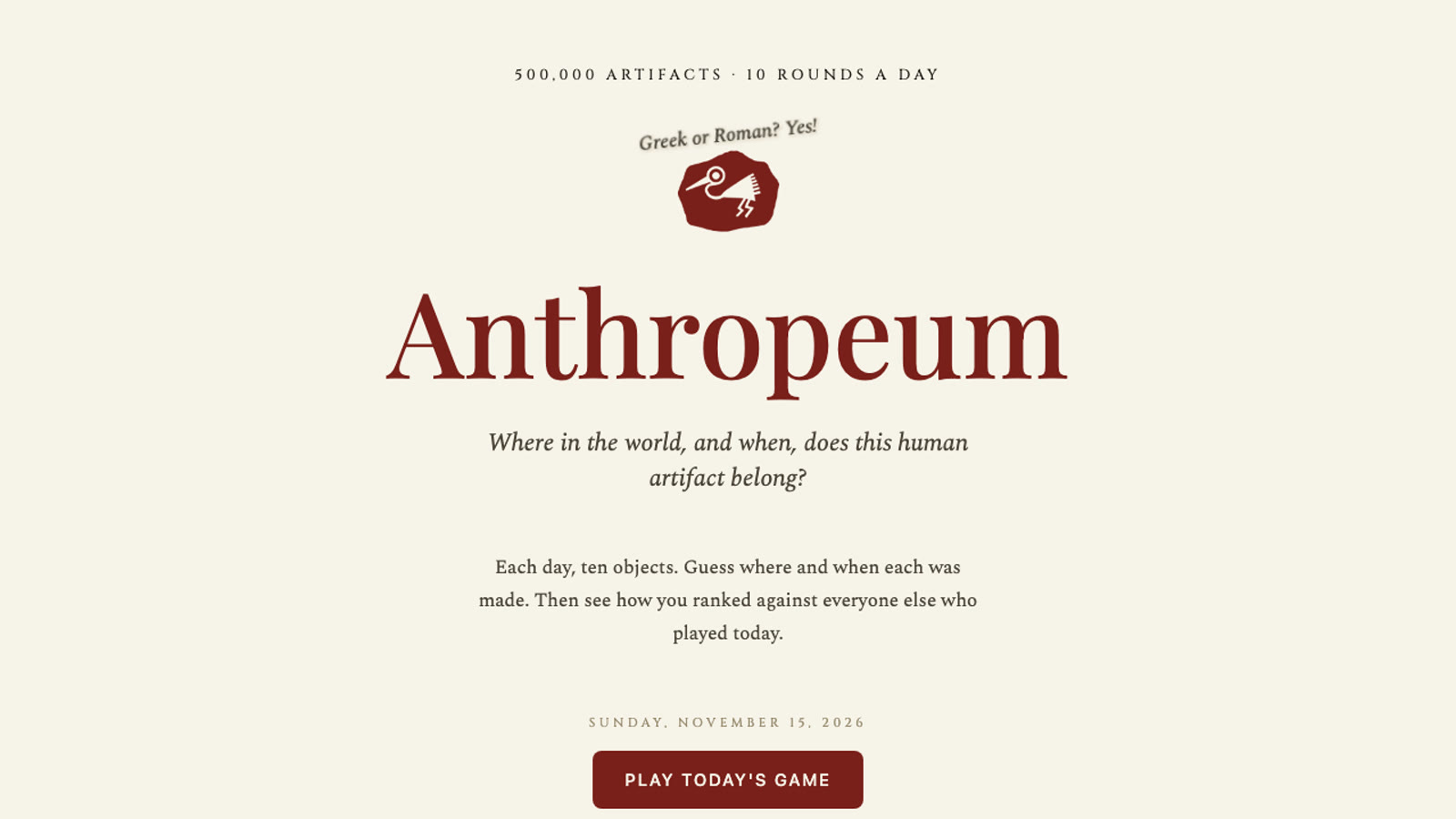
Free, no sign-up. The game loads from anthropeum.com when you press Play.
Opening the museum
Loading Anthropeum from anthropeum.com
- Artifacts
- 10 a day
- Per round
- Up to 10,000
- Top score
- 100,000
- Hints
- 3 a day, free
- Timeline
- 3000 BCE to today
- Price
- Free, no account
How to play Anthropeum
Ten rounds a day, the same ten objects for every player. Each round asks two questions: where was this made, and when?
Start today’s game
Press Play above, then Play today’s game. If you stop halfway, Resume game picks up at the round you left.
Study the object
Zoom into the photo. The material is listed under it, and it often gives the place away. Your hints sit here too.
Pin where it was made
Drop a pin on the world map at your best guess. Inside the right region earns full place points.
Tap when, then see the answer
Tap the timeline bar to pick a period. The region and the object’s story appear, and after ten rounds you see where you placed today.
How Anthropeum scoring works
Every round is worth up to 10,000 points, half for place and half for time. Each round also gets a color, and those ten colors are your share card.
Place: your pin scores the full 5,000 if it lands inside the region the object comes from, drawn as that culture’s area on a historical map for its time. Outside it, the points fall with every kilometer between your pin and the edge of the region.
Time: the game reads your pick on the timeline as a 250-year span. If that span touches the object’s date range, the round says Inside range and you get the full 5,000; otherwise the points fall with every year you are outside it. Ten rounds give a top score of 100,000. Each round’s total sets its color:
Anthropeum points by distance and years off
Place points shrink more slowly than time points: 2,000 km off still keeps more than a third of the place score, while 2,000 years off keeps far less of the time score.
| How far off | Place: that many km from the region | Time: that many years outside the range |
|---|---|---|
| Inside | 5,000 | 5,000 |
| 100 | 4,756 | 4,524 |
| 250 | 4,412 | 3,894 |
| 500 | 3,894 | 3,033 |
| 1,000 | 3,033 | 1,839 |
| 2,000 | 1,839 | 677 |
| 4,000 | 677 | 92 |
Worked out from the scoring in Anthropeum’s own game code, rounded the way the game rounds. Add the two halves for the round score, so a pin 500 km away and a guess 100 years out make 8,418, a Strong round.
What you see after ten rounds
Anthropeum is built around the end screen: your day against everyone else’s.
Final tally
Your ten rounds added up, out of 100,000, with the number of players who played today.
Where you placed
A curve of every score from today with yours marked on it, and the line You placed top N percent.
Round by round
A table of each artifact with how far off you were in kilometers and years, the place and time points, and how your round compares with the average.
Emoji scorecard
One colored square per round, copied to your clipboard, so friends see how you did without seeing the objects.
Days in a row
Play every day to grow your streak. It is kept in your browser, along with today’s results.
Three a day
A Time hint narrows the date to a 1,000-year span, a Place hint names the world region. They cost no points.
Anthropeum tips from the maker
The maker shares a few habits on anthropeum.com. In short, with how they fit the scoring:
Read the material first
Materials point to places. Nephrite jade was worked only in East Asia, while jadeite was prized in Mesoamerica, and some pigments and plants grew in one part of the world only.
Wood, paper and wool are usually young
Organic material rarely lasts more than about 500 years unless it was kept in exceptional conditions, so decay can do the dating for you.
Style tells the time
Designs change inside one region. In Egypt, stiff formal figures lean older, Old Kingdom, while flowing detail with elaborate wigs and movement leans New Kingdom.
Spend your hints
Three hints a day cost no points. A Place hint can save a red round, and since place is half the score, use one when you have no idea of the continent.
Where the artifacts and maps come from
The objects come from museum open-access collections, among them The Met and the Cleveland Museum of Art. The regions on the map come from historical-basemaps and OpenHistoricalMap. Anthropeum says it draws on about 500,000 artifacts, ten a day.
The maker adds three notes. On balance: the collections lean heavily European, so the game is weighted toward a wider range of cultures and periods, and is hard on purpose. On provenance: many of the objects left their home countries through colonialism, looting or coercion, and showing them is not an endorsement of that. On geography: past borders were never fixed lines, so every region on the map is an approximation, not a political statement.
Anthropeum compared with Eraly and Daily Rare Answer
Three daily games you can play on this site. Two ask you to place things in history; one asks for the answer nobody else gave.
| Anthropeum | Eraly | Daily Rare Answer | |
|---|---|---|---|
| Each day | 10 artifacts | 7 moments | 5 prompts |
| You guess | Where on a map, and when | The year, AD 1 to today | Any answer that fits |
| Clock | None, take your time | 25 s each | 30 s each |
| What scores | Closeness in km and years | Closeness in years | How few other players gave it |
Anthropeum facts are from anthropeum.com and Eraly facts from eraly.io. Play Eraly on its own page here and Daily Rare Answer on our home page.
Playing Anthropeum on this page
The game above is Anthropeum itself, loaded from anthropeum.com when you press Play. The objects, map and scores are the same as on anthropeum.com. Daily Rare Answer only shows it here and is not connected to its maker.
Anthropeum has no accounts and sets no cookies; your results, streak and hints stay in your browser. Most browsers keep what a game saves inside another site apart from what it saves on its own site, so if you already have a streak on anthropeum.com, keep playing there. For the maker’s notes, the Discord or r/Anthropeum, open anthropeum.com in its own tab.
Want more after your ten? Play today’s Daily Rare Answer, guess the year in Eraly, or launch a rocket in Cosmillion.
Anthropeum FAQ
What is Anthropeum?
Anthropeum is a free daily history and geography game from anthropeum.com. Each day it shows ten objects from museum open-access collections, and for each one you guess where in the world it was made and when. You score up to 10,000 points a round, and at the end you see how you ranked against everyone who played that day.
How do you play Anthropeum?
Press Play, then Play today’s game. For each of the ten artifacts, study the photo and the material listed under it, drop a pin on the map where you think it was made, and tap the timeline to pick when. The answer appears on the map with the object’s story, then the next round starts.
Is Anthropeum free?
Yes. There is no account, no sign-up and nothing to buy. A sponsor’s logo sits at the top of the game, and you can support the maker through Buy Me a Coffee if you want to.
How is Anthropeum scored?
Each round is worth up to 10,000 points: up to 5,000 for place and up to 5,000 for time. A pin inside the region where the object was made earns the full 5,000, and the points fall the further your pin is from that region. A time guess that touches the object’s date range earns the full 5,000, and the points fall with every year you are outside it. Ten rounds make a top score of 100,000.
What do the colored squares in Anthropeum mean?
Each square is one round. Blue is Perfect, 9,000 to 10,000 points. Green is Strong, 6,000 to 8,999. Yellow is Fair, 3,000 to 5,999. Red is a Miss, under 3,000. The share button copies the row of squares so you can post your day without giving away the objects.
How do hints work in Anthropeum?
You get three hints a day to spend across all ten rounds, and they cost no points. A Time hint narrows the date to a 1,000-year span. A Place hint names the world region the object comes from.
Where do the Anthropeum artifacts come from?
From museum open-access collections, including The Met and the Cleveland Museum of Art. The regions on the map come from historical map projects, historical-basemaps and OpenHistoricalMap, so the region shown is the culture’s area at that time, not a modern border.
Why is Anthropeum so hard?
On purpose. The maker says the museum collections lean heavily European, so the daily mix is weighted toward cultures and periods you rarely see, like sub-Saharan metalwork or pre-Columbian ceramics. Expect objects you have never heard of; the hints and the material line are there to help.
Is this the official Anthropeum?
The game on this page is the official one, loaded from anthropeum.com. This page is written by Daily Rare Answer, which is not connected to Anthropeum. For the maker’s own notes, the Discord or the subreddit, open anthropeum.com in its own tab.
What games are like Anthropeum?
Eraly is the closest on this site: a daily history game where you guess the year of seven moments, with one right answer each time. Daily Rare Answer, on our home page, works the other way round: many answers count, and the ones few players give score highest, like Krillion.
More daily games on Daily Rare Answer

Daily Rare Answer
Five prompts a day, with the crowd’s answers drawn as bubbles after each one.
Play Daily Rare Answer →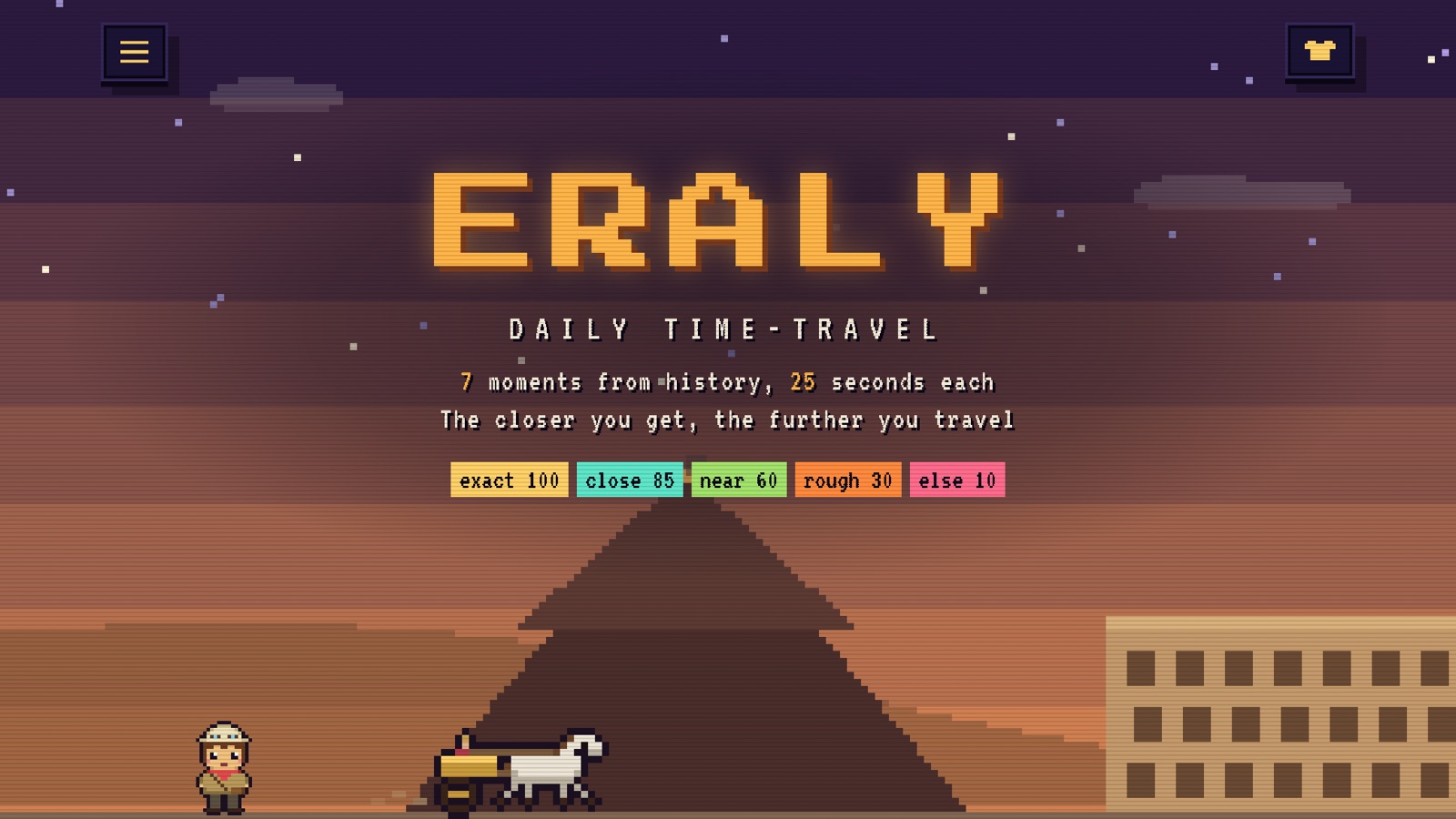
Eraly
Guess the year of seven moments from history. The closer you get, the more you score.
Play Eraly →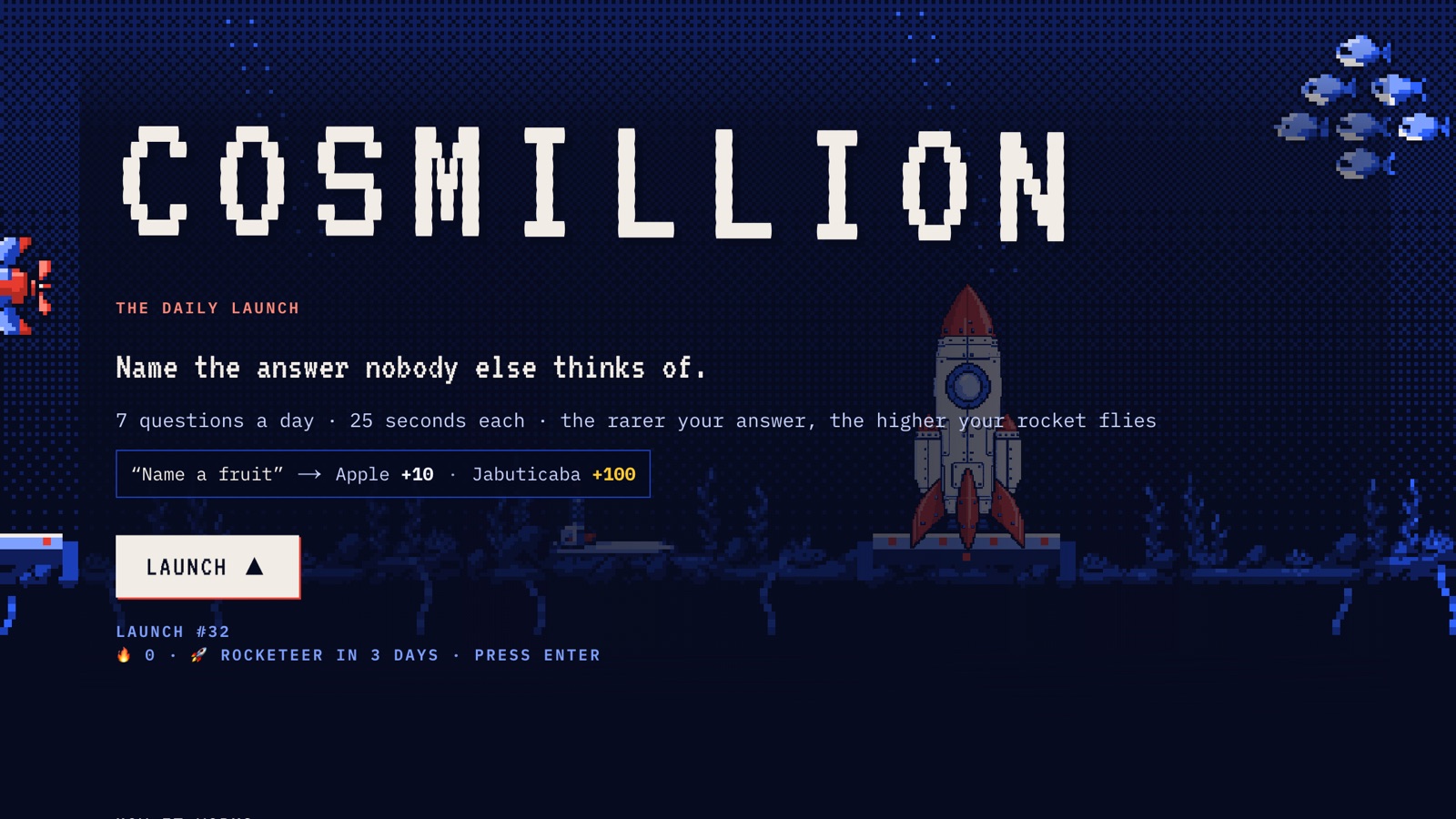
Cosmillion
Seven word prompts a day. A rarer answer sends your rocket higher.
Play Cosmillion →Comments
- Site owner
No comments yet. Post your score after today’s ten, and keep the objects to yourself so others can find them.